


How CNC Milling Works
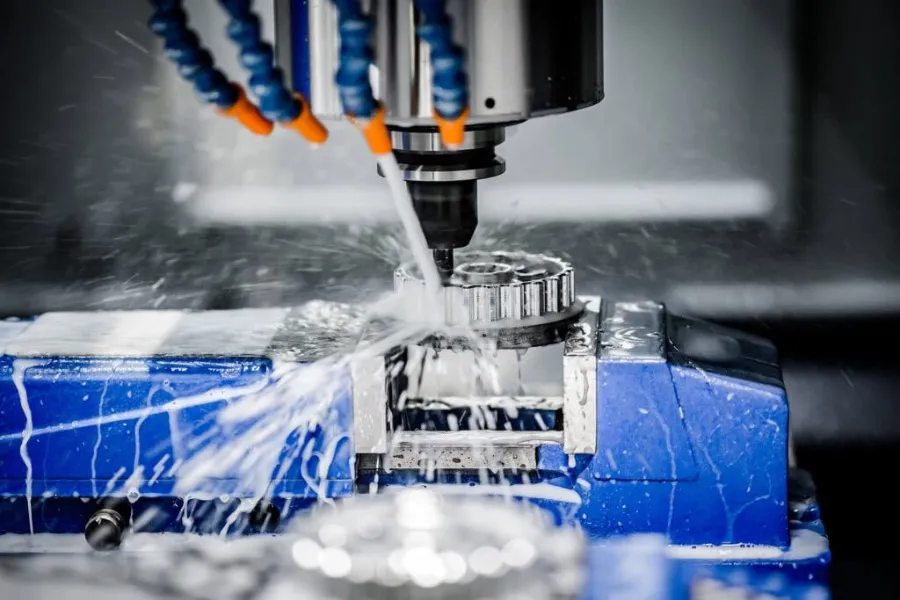
Before the incorporation of CNC, control in milling machines was carried out manually. This gave a lot of room for error. The end product was in the mind or view of the machinist, similar to the way an artist paints a picture. With the inclusion of CNC however, milling became a highly precise and accurate process, involving some steps. There are four sequential steps involved in creating a CNC-milled part:
- Designing a 3D model
- Converting the model to machine code
- Setting up the milling machine
- Actual milling
- Designing a 3D Model
The first step in the CNC milling process is designing a CAD model of the part to be milled. This is carried out using CAD programs available for the purpose.Converting From CAD to G-Code
Setting Up the CNC Milling Machine
Execution of Actual Milling
- The cutting tool moves across a stationary workpiece
- The workpiece feeds into the stationary, rotating cutting tool
- Both the workpiece and the cutting tool move relative to each other
- CNC milling machine with cutting fluids
Common CNC Milling Operations
There are numerous milling operations which CNC mills can carry out, depending on the type of cutting tool and the machine configuration. The four primary CNC milling operations are:
Face Milling
In face milling, the cutting tool's axis of rotation is perpendicular to the workpiece surface. This operation creates flat surfaces and requires end milling cutters which have cutting edges at their tip.
Plain Milling
The cutting tool for plain milling has cutting edges along its entire cutting circumference. Its axis of rotation is parallel to the workpiece surface. Plain milling produces features like pockets, slots, and cavities.
Angular Milling
In angular milling, the axes of rotation of the cutting tools are at an angle to the surface of the workpiece. They are known as single-angle milling cutters. Angular milling produces features like dovetails, chamfers, grooves, etc.
Form Milling
Form milling involves the production of irregular surfaces, contours, semi-circular cavities, beads, and curved surfaces. This operation employs cutting tools such as fly cutters and formed milling cutters.
Other milling operations include:
- Gear cutting is the production of gear teeth using gear cutters.
- Gang milling, in which two or more cutters simultaneously perform the same or different operations on a single workpiece. It is the fastest milling operation.
- Straddle milling which employs two cutters to simultaneously mill parallel surfaces of a workpiece in a single cut.