Call Us: +86-769-22654041Email: cz004@czjs168.com
enLanguage

Power Tool Accessories

Why Choose Us?

Rich Experience

Dongguan Chengzhu Metal Products Co., Ltd. was established on April 28, 2013. It is an enterprise integrating the molding, research and development, production and marketing of light alloy materials.

One-stop Solution

The business scope includes the manufacturing of precision die casting molds for magnesium alloys, aluminum alloys and other light alloys, and the R&D, design, production and sales of die castings.

Widely Used Products

Products are mainly used in medical equipment, unmanned aircraft parts, robot/manipulator parts, new energy vehicle parts, motorcycles, electric vehicles, Motorized scooter, electric tools, sports equipment, 3C, LED, industrial parts and other fields.


What Are the Products of Power Tool Accessories


Alloy Casing Castings For Chainsaws

Impact Drill Alloy Housing Castings

Angle Grinder Aluminum Alloy And Magnesium Alloy Housing Castings

Alloy Shell Castings For Hand Drills


Why Choose Magnesium Alloy as the Material for the Chainsaws Casing


Compared to steel, magnesium alloy is 75% lighter with no significant loss of strength. It is a far better material for complex, thin-walled, net-shaped, or near-net-shaped castings and offers greater dimensional stability. magnesium alloy castings can meet tight tolerances that would be difficult or impossible to achieve with steel. Tooling costs can be lower for magnesium alloy castings, as multiple parts can be easily consolidated into a single component. This also improves component rigidity and reduces welding and assembly costs.


When comparing magnesium alloy to aluminum, it is 33% lighter, has similar or improved mechanical properties, and is easier to machine. magnesium alloy provides greater corrosion resistance and is better suited to large, thin-wall, net-shaped complex parts.


Magnesium alloy is stronger and stiffer than even the most advanced engineered plastics. It also provides greater wear resistance, higher temperature resistance, and better energy absorption/impact resistance characteristics.


Chain Saw Main Alloy Castings
Alloy Shell Castings for Hand Drills
Alloy Casing Castings for Chainsaws
Impact Drill Alloy Housing Castings
Angle Grinder Aluminum Alloy and Magnesium Alloy Housing Castings

Saw chain
The chainsaw's namesake component, the saw chain, is the part of the machine that actually cuts into wood. When the chainsaw is in operation, the motor propels the saw chain around a guide bar at high speeds, allowing the teeth to cut chips from the side and bottom. Somewhat counter-intuitively, modern saw chains feature depth gauges that limit the depth of cut on each individual tooth. Making sure that individual teeth do not bite too deeply into the wood stops the chain from binding in the wood and allows efficient, safe operation of the tool.


Guide bar
A chainsaw's guide bar is a long, rounded piece of metal, usually made from a wear-resistant steel alloy. Guide bars typically range from 16 to 36 inches long. An edge slot around the outside of the bar guides the cutting chain and holds it in position. The operator controls the machine by positioning the guide bar against the object he wishes to cut. Previously, loop-style guide bars known as bow bars were used to buck logs and clear brush, but they are now almost never used due to their increased risk of injury.


Throttle
The chainsaw's throttle controls the supply of fuel to the engine and thus controls the saw's revolutions per minute. Thus, the throttle allows the chainsaw's operator to increase or decrease the saw's speed as necessary to adapt to different jobs. As a safety mechanism, modern chainsaws automatically stop the chain as soon as the operator releases pressure on the throttle.


Engine control
The engine connects to the cutting chain itself by means of a clutch and a sprocket. Among the clutch's functions is to keep the engine from stalling if the chain abruptly slows or stops, a fairly common occurrence when cutting through hard or frozen wood. Another is to prevent the chain from rotating while the engine is idling, preventing accidental damage to the saw or injury to the operator. A well-tuned clutch keeps the machine running efficiently and consistently, improving safety and performance.


Decompression valve
The decompression valve releases air compression produced by operating the saw. Eliminating this compression makes starting the chainsaw much easier. It reduces the energy required to pull the starter cord, makes a strong ignition spark, and produces an ideal air-fuel mixture in the engine.


Noise control
Because they operate at very high speeds, chainsaws tend to produce a lot of noise. In particular, larger chainsaws with gasoline-powered engines tend to be extremely noisy devices. Mufflers work to at least somewhat reduce the noise output; they not only keep the operator's neighbors happy but also help the operator himself stay aware of his surroundings, thereby improving safety. Note that smaller electric chainsaws naturally make less noise and thus require less noise control.


Chain stoppers
Given their impressive cutting power, chainsaws are potentially very dangerous devices. One of these devices is the chain catcher, a metal or plastic guard designed to intercept a broken or derailed chain. Instead of striking the operator's hand, the chain should simply hit the chain catcher. Although the chain brake cannot stop the chain from hitting the operator at all, it can stop the chain from rotating as it hits the operator.


Anti-vibration handle systems
Even when they are lubricated well and used properly, chainsaws tend to vibrate a great deal. Excessive vibration can cause a variety of injuries to the operator, including white finger and hand-arm vibration syndrome. To reduce the stress this vibration places on the user's hands, modern chainsaws separate the actual cutting portion of the device from the handle and controls using a mounting system. Some chainsaws use metal springs to prevent vibration from reaching the operator, while others use rubber bushes.


Features of Impact Drill Alloy Housing Castings
 

Lightweight & simple castability: Magnesium alloy holds the title of being the lightest structural metal on earth. It has a density of 1.7g/cm3, making alloy components between 50-70% lighter than those of steel and 15-30% lighter than aluminium components. It is also flexible, making it easy to machine and cast whilst also enabling the use of injection moulding.


Strong & dampening: Even though magnesium alloy is light and flexible, it has an impressive strength-to-weight ratio. It also provides a good level of stiffness due to its hexagonal, close packed crystal structure. Cast magnesium alloy alloys have a tensile strength of up to 280 MPa and yield strengths of up to 160 MPa. Wrought magnesium alloy alloys have even greater strengths, with up to 360 MPa tensile and 300 MPa yield. Alongside its strength, magnesium alloy also has impressive dampening properties caused by the high mobility dislocations in the metal.


Abundant, green & recyclable: Alongside being the lightest metal on earth, magnesium alloy is also one of the most abundant elements on its surface. Over 60 different minerals are known to have a magnesium alloy content of 20% or greater, making it the eighth most abundant element in the earth's crust. magnesium alloy is also 100% recyclable.


Precautions for the Production of Alloy Casing Castings for Chainsaws
 

Die Life

A significant improvement in die life compared to die casting of aluminium can be expected. This is effected with magnesium because of the heat transfer characteristics and the reduced affinity with iron, resulting in negligible soldering and reduced erosion.

Productivity

Because of the lower heat content of magnesium compared with aluminium, the metal solidifies at a faster rate, generating shorter cycle times, typically by 15-25%. Exceptional dimensional stability of the as-cast product is a particular characteristic of cast magnesium alloys. Frequently, annealing or stress relieving treatments are not required with magnesium, contrary to experiences with some cast aluminium components where some growth continues as natural ageing effects occur over extended times at moderate to elevated temperatures. Machinability is excellent, exhibiting the best characteristics of all the structural materials viz reduced machining time, lower power requirements, longer tool life, excellent surface finish frequently with a single cut and minimal tool build-up with lower overall machining costs.

Sensitivities

During the die casting cycle each part of the casting will develop a microstructure governed by the local solidification rate and pattern. Correct design of the casting and its feeding system are essential to ensure a uniform and directional solidification pattern. Where this is not achieved, it is to be expected that a certain fraction of microporosity will form due to volume contraction during solidification. This will inhibit the achievement of the excellent properties attainable in die cast magnesium. Ductility is a significant process-sensitive parameter with the control of inhomogeneities, defects and process of paramount importance in realising the potential for structural applications.


2


Die Casting Strengths: Alloy Casing Castings for Chainsaws

Die casting is a metal forming method in which metal melted at a high temperature is poured into a mold (die).
In die casting, a precision metal mold (die) is filled with molten metal at high speed under high pressure, instantly forming a product (casting). The raw materials used include non-ferrous alloys such as aluminum, magnesium and zinc.
Die casting is characterized by high dimensional accuracy and allows for the mass production of thin-walled products with complex shapes. Die casting also has the advantage of producing smooth casting surfaces requiring less machining after molding.


Is Alloy Casing Castings for Chainsaws Strong


The importance of die cast metals has rapidly increased due to their high strength, durability, stability, and cost-effectiveness. In addition, they have proved to be beneficial for tight tolerances and complex shapes. As a result, the manufacturing industry prefers to die casting for complex shapes and components for various projects.


The process that accelerates the creation of molded products by converting molten non-ferrous alloys into dies under high pressure is called die casting. The metals used during this process are called die-cast metals.


Aluminum, copper, iron, zinc, and magnesium are some of the most common die cast metals used for various components. The durability and strength vary from metal to metal.


Benefits of Alloy Casing Castings for Chainsaws


Magnesium alloy is a top choice for die-casting due to its unique properties, such as strength and durability combined with a lightweight structure, which is similar to plastic. Its unique features such as castability, ease of machining, and recyclability make it an excellent material option for die-casting strong but lightweight components.


Magnesium alloy alloys are 33% lighter than aluminum and 75% lighter than steel with excellent strength-to-weight ratio. With good thermal and electrical conductivity, magnesium alloy is an excellent material choice for electronic components while also offering good shielding from electromagnetic or radio-frequency interference. magnesium alloy alloys have remarkable shock-absorbing properties that enable them to be used in applications where noise and vibration are of concerns.


Magnesium alloy alloys have high fluidity, allowing for intricate features and thin walls to be casted. Although the cost of magnesium alloy per pound is higher than aluminum or zinc, magnesium alloy alloys provide more parts per pound and can offer significant cost savings in other ways. magnesium alloy has a lower heat capacity compared to aluminum, this means it will heat up and cool down faster, which decreases its production cycle time and increases productivity.


Magnesium alloy die cast parts are easier to machine, requiring less time and decreasing machining costs, making magnesium alloy a good material choice for projects that requires a lot of secondary machining. Although magnesium alloy die-casted parts usually remain uncoated due to their excellent surface finish, a variety of surface treatment options are available, including powder coat, liquid paint, plating, and chromate.


Magnesium alloy alloys are a sustainable material option that offer an environmentally-friendly alternative to plastics. The scrap material from magnesium alloy parts is 100% recyclable.


Our Factory


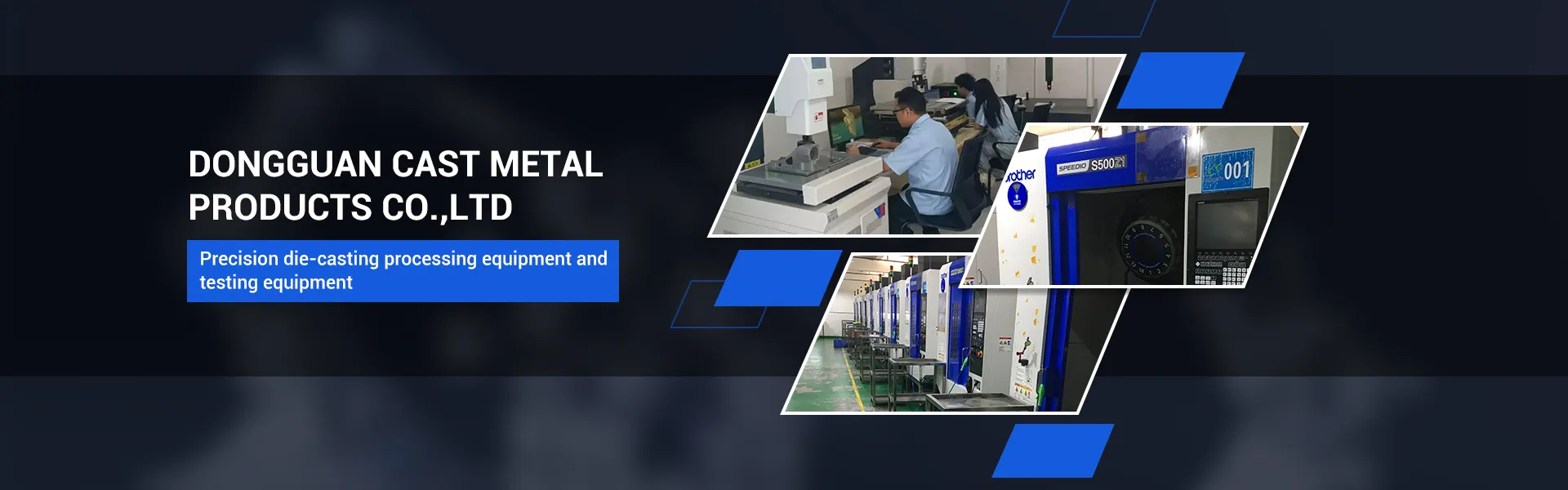
Dongguan Chengzhu Metal Products Co., Ltd. was established on April 28, 2013. Its registered address is located at No. 1, 1st Street, Fujie, Tangqiu Village, Liaobu, Dongguan City. Its legal representative is Zhao Chenhuang, with a registered capital of 3 million yuan. It is an enterprise integrating the molding, research and development, production and marketing of light alloy materials, and a well-known enterprise in Guangdong Province producing light alloy products.
The business scope includes the manufacturing of precision die casting molds for magnesium alloys, aluminum alloys and other light alloys, and the R&D, design, production and sales of die castings, which are mainly used in medical equipment, unmanned aircraft parts, robot/manipulator parts, new energy vehicle parts, motorcycles, electric vehicles, Motorized scooter, electric tools, sports equipment, 3C, LED, industrial parts and other fields.


productcate-1-1


FAQ


Q: Why choose magnesium alloy as the material for the chainsaws casing?

A: Compared to steel, magnesium alloy is 75% lighter with no significant loss of strength. It is a far better material for complex, thin-walled, net-shaped, or near-net-shaped castings and offers greater dimensional stability. magnesium alloy castings can meet tight tolerances that would be difficult or impossible to achieve with steel. Tooling costs can be lower for magnesium alloy castings, as multiple parts can be easily consolidated into a single component. This also improves component rigidity and reduces welding and assembly costs.
When comparing magnesium alloy to aluminum, it is 33% lighter, has similar or improved mechanical properties, and is easier to machine. magnesium alloy provides greater corrosion resistance and is better suited to large, thin-wall, net-shaped complex parts.
magnesium alloy is stronger and stiffer than even the most advanced engineered plastics. It also provides greater wear resistance, higher temperature resistance, and better energy absorption/impact resistance characteristics.

Q: What is the purpose of magnesium alloy casting?

A: Magnesium alloy castings are used for both cast and forged components, with the aluminium-containing alloys usually used for casting and the zirconium-containing ones for forgings; the zirconium-based alloys can be used at higher temperatures and are popular in aerospace.

Q: What is stir casting of magnesium alloy casting?

A: Stirred casting process is influence by different process parameter like porosity, wettability, mixing rate of reinforcement, stirred blade angle and distribution of reinforcement particle. It is observed that SiC matrix is better than Al2O3 reinforced Magnesium matrix due to less wearing and creep resistance.

Q: Is magnesium alloy casting same as aluminum?

A: While magnesium is lighter, has a lower melting point, and better thermal conductivity, aluminum is stronger and more ductile. When choosing a material for die casting, it is vital to take into account the particular needs of the application and carefully evaluate the advantages and disadvantages of each metal option.

Q: What happens if you mix aluminum and magnesium?

A: Al-Mg alloys possess moderate strength, high corrosion resistance, and appropriate weldability, which can be strengthened by work hardening and solid-solution strengthening. This kind of alloys are widely used in marine, aerospace, transportation, and forging industries.

Q: Why is magnesium good for casting?

A: There are many benefits to casting with magnesium. Not only is magnesium the lightest of all the structured materials but it has excellent stiffness and strength-to-weight ratios. Additionally, it has outstanding EMI and RFI shielding properties, perfect for connectors and electrical housings.

Q: What is the composition of magnesium alloy casting?

A: Here is the composition of all the elements that make up a magnesium aluminum alloy: Magnesium [Mg] material ranges between 0.5% and 13% in composition. Boron [B] material occupies a value of up to 0.05% Silicon [Si] will take up 2%.

Q: Why use magnesium alloy casting?

A: Magnesium alloy castings are more resistant to corrosion, stronger and more stable than in their untreated state, greatly enhancing their suitability for almost every application, in every industry.

Q: Is magnesium alloy casting more expensive than aluminum?

A: Although it is a lightweight material, magnesium has a good strength-to-weight ratio and is corrosion resistant. Compared to aluminum, magnesium is softer, less stable and tends to bend easier under stress.

Q: How do you clean magnesium alloy casting?

A: The surface can be cleaned using a degreaser or a mild detergent. The surface can then be rinsed with distilled water and dried with a clean cloth. Chemical Bath: The magnesium alloy casting can be immersed in a chemical bath containing a solution of mild acid, such as dilute acetic acid or citric acid.

Q: Does magnesium alloy casting rust?

A: Just as steel will rust and copper will tarnish, so magnesium will acquire a surface coating of oxide, but no corrosion will take place unless a definite corrosive factor is present.

Q: What is the formula for magnesium alloy casting?

A: Magnesium levels of up to 5% and manganese content up to 1% are used for wrought alloys. Mg contents up to 10% are also possible for cast alloys; however, contents of 7% and more are considered heavypourable.

Q: Is magnesium alloy casting stronger than plastic?

A: Die cast magnesium parts typically outperform plastics by delivering: Stronger and greater wear resistance than plastic. Superior stiffness as plastic often requires significant reinforcing. Greater impact resistance and energy absorbing capacity.

Q: Is magnesium alloy casting conductive?

A: Magnesium alloy casting has the thermal conductivity of 51 W/m·K at 20°C and the commonly used A380 (Al-9wt. %Si-3wt. %Cu) aluminium alloy has the thermal conductivity of 108 W/m·K at 20°C.

Q: Is magnesium alloy casting safe?

A: In correct use and correctly specified, magnesium alloy castings are safe and do not create a fire hazard. With the appropriate alloy combination, magnesium does not ignite or explode.

Q: What are the key features of magnesium alloy casting?

A: Magnesium alloy castings are known for their excellent machinability, allowing them to be easily cast, forged, and extruded. They can be welded and brazed without difficulty, and exhibit good corrosion resistance.

Q: Is magnesium alloy casting heavy?

A: Lightweight & simple castability - Magnesium holds the title of being the lightest structural metal on earth. It has a density of 1.7g/cm3, making alloy components between 50-70% lighter than those of steel and 15-30% lighter than aluminium components.

Q: Is magnesium alloy casting stronger than titanium?

A: Titanium is significantly stronger (220 MPa) than both aluminium and magnesium, although its higher density means that strength-to-weight ratios for the three metals tend to be similar. It is often the first port of call for engineers looking to replace steel in a lightweighting exercise for stressed components.

Q: What are the properties of cast magnesium alloy casting?

A: Magnesium casting proof stress is typically 75–200 MPa, tensile strength 135–285 MPa and elongation 2–10%. Typical density is 1.8 g/cm3 and Young's modulus is 42 GPa. Most common cast alloys are: AZ63.

Q: Why would you use magnesium alloy casting?

A: Magnesium alloy casting is characterized by high dimensional accuracy and allows for the mass production of thin-walled products with complex shapes. Die casting also has the advantage of producing smooth casting surfaces requiring less machining after molding.

We're professional power tool accessories manufacturers in China, specialized in providing high quality OEM service. We warmly welcome you to buy high-gradepower tool accessories made in China here from our factory.

Angle Grinder Aluminum Alloy And Magnesium Alloy Housing Castings, Alloy Casing Castings for Chainsaws, Impact Drill Alloy Housing Castings

(0/10)

clearall