


Indoor LED Lighting
Indoor LED lighting refers to the use of light-emitting diodes (LEDs) as a source of illumination within indoor environments, offering a modern and energy-efficient alternative to traditional lighting options like incandescent and fluorescent bulbs. LEDs are known for their exceptional energy efficiency, consuming significantly less power while providing high-quality light with excellent color rendering.
What Is Indoor LED Lighting?
Indoor LED lighting refers to the use of light-emitting diodes (LEDs) as a source of illumination within indoor environments, offering a modern and energy-efficient alternative to traditional lighting options like incandescent and fluorescent bulbs. LEDs are known for their exceptional energy efficiency, consuming significantly less power while providing high-quality light with excellent color rendering. They have a long lifespan, often lasting up to 25,000 to 50,000 hours, which reduces the need for frequent replacements and maintenance. Available in various designs and color temperatures, indoor LED lighting can be tailored to suit different spaces, from residential homes to commercial establishments. Additionally, many LED fixtures are compatible with smart technology, allowing for features such as dimming and remote control, further enhancing their versatility and convenience.
Advantages of Indoor LED Lighting
Efficiency
Indoor led lights are known for their energy efficiency, consuming less electricity compared to traditional light bulbs, thus reflecting positively on your utility bills. They wield the power to transform your spaces, all while being kind to your wallet. That's a win-win situation!
Variety
Indoor led lights come in a plethora of shapes, sizes, and designs catering to varied tastes and decor themes. Be it a lavish chandelier for your dining area or a sleek tube light for your kitchen, indoor led lights offer something for everyone.
Safety
Led lights generate less heat compared to traditional bulbs, making them a safer option, especially when you have kids running around or pets in the house. It's reassuring to know that safety doesn't have to be compromised for aesthetics.
Longevity
Led lights are famed for their extended lifespan. The longer operational life means less frequent replacements, saving you time, effort, and money in the long run.


Why Choose Us
Rich experience
Dongguan chengzhu metal products co., ltd. Was established on april 28, 2013. It is an enterprise integrating the molding, research and development, production and marketing of light alloy materials.
One-stop solution
The business scope includes the manufacturing of precision die casting molds for magnesium alloys, aluminum alloys and other light alloys, and the r&d, design, production and sales of die castings.
Widely used products
Products are mainly used in medical equipment, unmanned aircraft parts, robot/manipulator parts, new energy vehicle parts, motorcycles, electric vehicles, motorized scooter, electric tools, sports equipment, 3c, led, industrial parts and other fields.
Ceiling lights
These are lighting fixtures that are mounted on the ceiling and provide general illumination to the room. They include
Chandeliers
Ornate, hanging ceiling fixtures that often have multiple arms with light sources.
Pendant lights
Similar to chandeliers, but typically have a single light source and hang lower from the ceiling.
Led slim panel lights
Thin and sleek light fixtures that are mounted flush against the ceiling, providing a modern and minimalistic look.
Led batten lights
Long and narrow light fixtures that are mounted flush against the ceiling, commonly used in garages, workshops, and basements.
Wall lights
These are lighting fixtures that are mounted on walls and can provide ambient or accent lighting. They include.
Downlights
Lighting fixtures that are recessed into the ceiling and direct light downwards, often used in kitchens and bathrooms.
Spotlights
Lighting fixtures that can be directed to highlight specific features or objects, often used in art galleries and museums.
Track lights
Lighting fixtures that are mounted on a track and can be adjusted to direct light where needed, often used in retail and commercial spaces.
Wall lights
Lighting fixtures that are mounted on walls and provide ambient or accent lighting, often used in hallways and bedrooms.
Desk and floor lamps
These are portable lighting fixtures that can be placed on a desk or the floor to provide task or ambient lighting. They include:
Desk lamps
Lighting fixtures that are designed for use on a desk or work surface to provide task lighting, often used in home offices and study areas.
Floor lamps
Lighting fixtures that stand on the floor and provide ambient lighting, often used in living rooms and bedrooms.
Application of Indoor LED Lighting
Ambient lighting with led strips
Led strip lights have revolutionized ambient lighting, offering a flexible and discreet solution for creating warm and inviting atmospheres. Installed along ceilings, walls, or even beneath furniture, led strips emit a soft, indirect glow that transforms the ambiance of a room. Ideal for spaces like living rooms and bedrooms, these strips provide a customizable lighting option, allowing residents to adjust the intensity to suit different moods and occasions.
Cove lighting for architectural emphasis
Cove lighting, achieved through strategically placed led strips or fixtures in recessed areas, adds a touch of sophistication to interior spaces. The gentle, indirect illumination highlights architectural details such as crown molding, tray ceilings, or feature walls. The result is a visually dynamic environment that combines subtle elegance with a modern aesthetic. Cove lighting is particularly effective in creating depth and emphasizing architectural nuances in contemporary design.
Task lighting for enhanced functionality
Led lighting's versatility extends to task-oriented areas, where functionality meets design. In spaces like kitchens, offices, or reading nooks, led task lighting becomes indispensable. Under-cabinet led lights in kitchens provide focused and well-distributed illumination, making food preparation and cooking more efficient. Adjustable led desk lamps in offices offer targeted lighting, reducing eye strain and creating an optimal work environment that seamlessly blends practicality with aesthetic appeal.
Backlit lighting for mirrors
Integrating led lighting behind mirrors introduces a contemporary and stylish element to bathrooms or dressing areas. This backlit illumination not only enhances functionality by improving visibility but also adds a layer of sophistication to the overall design. The soft glow surrounding the mirror creates a visual focal point, turning a utilitarian item into a statement piece that contributes to the rooms's elegance.
Kitchen counter lighting
Led lighting plays a crucial role in kitchen design, especially when it comes to illuminating countertops. Under-cabinet led lights provide focused and task-specific lighting, ensuring that kitchen workspaces are well-lit and efficient. The cool and crisp illumination enhances visibility, making it easier to chop ingredients, read recipes, and perform various kitchen tasks with precision.
Bathroom vanity lighting
In bathrooms, vanity lighting is essential for creating a well-lit space that is both functional and aesthetically pleasing. Led lighting, especially in the form of vertical strips flanking the bathroom mirror, provides even and shadow-free illumination. This not only enhances the clarity of reflection but also contributes to a hotel-like ambiance, creating a relaxing and visually appealing environment.
Components of Indoor LED Lighting


Circuit board
The circuit board is the main component; you can call it the brain of the led light. The circuit board receives electrical energy and then directs the led to perform the functions it has to perform. The signals provided by the circuit board to the led include turning the led on and off, changing the color, or dimming the led.
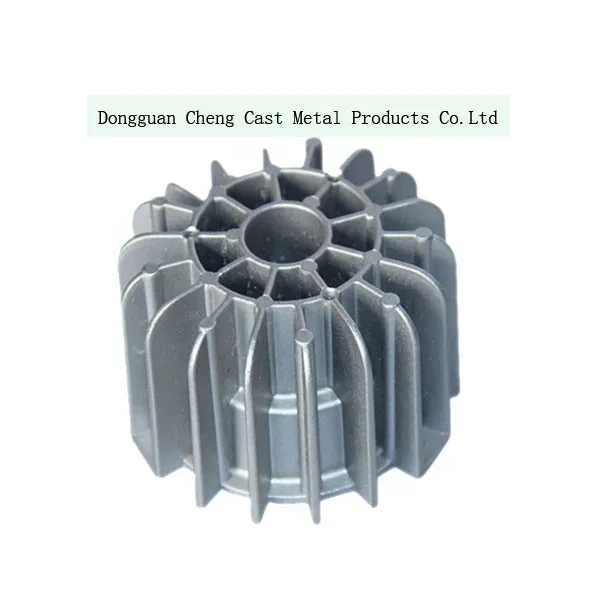
Heat sink
The heat sink is designed to increase the life and performance of the led. The heat sink plays a very important role in managing the heat in the led. When electrical energy is converted into light, some heat is generated, which needs to be properly dissipated to avoid damaging the led.
The heat sink acts as a passive heat exchanger that dissipates the heat from the led to the surrounding environment. The heat sink is made of materials with high thermal conductivity, and these materials include copper or aluminum as they are effective choices.
Housing
The led housing is a housing that plays a very important role in the installation and performance of the led. The components inside the led are protected by the housing. It provides heat dissipation and mechanical support to the led.
The housing covers the sensitive components inside the led, including the circuitry, led chip, and other components, protecting them from moisture, dust, and any other physical damage. It helps to increase the life of the led. Moreover, the housing also facilitates installation and keeps it stable and in the right position.
Led modules
Led light modules use leds to turn on and fully act as a light bulb. Led light modules are slightly different from led bulbs. They have leds on circuit boards, and these circuit boards are shaped differently.
Led light modules are versatile and can either operate independently or be plugged into any lighting fixture. These led light modules help create unique features by eliminating the bulb-like appearance.
Power supply
Led power supply is responsible for converting ac power to dc power. The power supply contains a driver power supply, which converts the power to a given current and voltage so that the led voltage converter can work properly.
Led power supply has inputs, which consist of high-voltage ac, low-voltage dc, low-voltage high-frequency ac, and high-voltage dc.
Base
The bulb comes with a base, which helps to fix the fixture in the desired location. When it comes to leds, they are designed to replace existing bulbs and there are various base types to choose from.
Cob led
Cob led, or chip-on-board led, is a type of led packaging technology. Traditional leds are led chips mounted on printed circuit boards. Cob technology, on the other hand, packages multiple led chips on the same substrate to form a module.
Cob leds offer higher brightness because multiple chips are combined instead of one, and thermal performance is improved due to improved heat dissipation. They help extend the life of the led and increase efficiency.
Led drivers
Leds are designed to run on direct current at low voltage. However, in most cases, the voltage supply is higher because it varies from country to country. Led drivers can regulate both high voltage and ac low voltage.
Led drivers also help protect leds from voltage and current fluctuations. Lights flickering or buzzing is because of poor quality led drivers. Therefore, the role of led drivers is very important and having a high-quality driver is equally important.
Led lights
Led lights or led chips are the main components of led lamps. Led lights or led chips emit light when current passes through them. Without led chips, no light is produced.
Optical lenses
In order to distribute the light emitted by leds, a very important component is needed, and that is the optical lens. The optical lens is a cover made of shatterproof plastic, which helps make the led look closer to a traditional light bulb.
Wires
Each led light fixture has multiple wires, each with a different purpose. Led lights primarily have power wires, including the line wire (which carries power from the power source to the light fixture) and the neutral wire (which completes the circuit and provides a path for the current to return to the power source).
How to Maintain Indoor LED Lighting
Choose the right bulbs
Different environments may require different types of bulbs. As a result, choosing the correct brightness, wattage, and color temperature is essential. For example, certain indoor led lighting are suitable for office spaces, while others work better in industrial areas.
Regulate the temperature
Although led bulbs stand up better to hot temperatures than other bulbs, you should still maintain a cooler temperature around them. If you expose your bulbs or fixtures to higher temperatures, they may start to lose efficiency and burn out. Many led bulbs can withstand temperatures of up to 185 fahrenheit before failing, but you should try to ensure they don't come close to that.
Reduce humidity
Another essential led lighting maintenance tip is to watch the humidity levels. Excessive moisture in the air can cause lasting damage to the electronic components inside the bulbs. When working in humid workspaces, ensure there's proper ventilation and a dehumidifier if necessary.
Clean them regularly
One of the largest advantages of led bulbs is their longevity. However, because these bulbs can last for years before they burn out, many people neglect to clean them and the areas around them. Built-up dust can short out your bulbs and cut their lifespan, so remember to perform an annual or semi-annual cleaning of your light fixtures to protect your bulbs.
Inspect them routinely
When performing maintenance, getting regular inspections of your lights is always a good idea. A licensed technician may help you determine if there are any issues with the electronic components in your bulbs or if you need to adjust the wiring in your fixtures.
Process of Indoor LED Lighting
Step 1: Producing semiconductor wafers
The first thing to do is to produce semiconductor material. Because of its flat, round shape, it is often called a semiconductor wafer. Its production process is as follows:
In a high-temperature and high-pressure chamber, a mixture of various elements, including gallium, arsenic, and phosphorus, is generated. These elements are purified and mixed in the chamber. This causes them to liquefy into a concentrated solution.
The essence is then extracted from the mixture using a special rod. The rod is slowly pulled out. At the end of the rod, the solution cools and then crystallizes. This forms a cylindrical crystal ingot.
The newly formed ingot is cut into semiconductor wafers and then polished to a smooth surface. This helps them adhere to other wafer layers in the next step of the production process.
The wafers are then immersed in a solvent solution to remove dust, dirt, or organic matter.
Step 2: Doping - Adding layers of semiconductor material to the wafer
Additional layers of semiconductor crystals are grown on the wafer. At this stage, impurities or dopants (usually nitrogen and zinc) can be added to the wafer. As part of this process, semiconductor regions are given positive and negative charge regions.
One side of the wafer is doped with acceptor impurities that have fewer electrons, which is called the p-type semiconductor layer. The other side is doped with donor impurities that have more electrons, which is called the n-type semiconductor layer.
This setup is designed so that the electrons of the n-type layer will migrate to the p-type layer through a region called the pn junction. The electrons move back and forth in this region, allowing the semiconductor to generate energy.
Step 3: Define the metal contact pattern on the semiconductor
This is determined during the design phase, where it will be decided whether the diode will be used alone or in conjunction with other diodes. The contact metal is evaporated onto the pattern in a high-temperature vacuum sealed chamber. The metal is heated to a temperature that causes it to evaporate. It then condenses onto the wafer.
Step 4: Mount the diode to the package
The diode is then mounted to the package. Two thin wires are connected to the diode and pressed against the contact metal. The entire assembly is then coated with protective plastic.
What Should Be Considered When Choosing Indoor LED Lighting?
Purpose
The first thing to consider when choosing Indoor LED Lighting is the purpose of the room or space you are lighting. Different spaces may require different types of lighting, such as task lighting for a home office or ambient lighting for a living room.
Brightness
The brightness of the lighting is another important factor to consider. The brightness of the lighting should be appropriate for the activity or tasks being performed in the room, and should also be comfortable for the eyes.
Colour temperature
The colour temperature of the lighting is another important consideration. The colour temperature can affect the mood and ambiance of a room, with warmer temperatures creating a cozy and relaxing atmosphere, and cooler temperatures creating a more energizing and stimulating environment.
Energy efficiency
Another important factor to consider when choosing Indoor LED Lighting is energy efficiency. Energy-efficient lighting can save you money on your energy bills and help to reduce your carbon footprint.
Style and design
The style and design of the lighting should also be considered, as it can have an impact on the overall aesthetic of the room. The lighting should complement the existing decor and style of the room.
Maintenance and lifespan
It is also important to consider the maintenance and lifespan of the lighting. Some types of lighting may require more maintenance than others, and some may have a shorter lifespan, which can affect the overall cost and convenience of the lighting.
In its simplest form, an LED -- or Light Emitting Diode -- is a type of semiconductor that has two terminals and manages the direction light will go. When an electrical current runs through the semiconductor (aka diode), it makes light. To make the light magic happen, the LED uses a process called p-n junctions. One side of the diode fills with semiconductive substances that have a negative charge, while the other side fills with semiconductive substances. However, this time they have a positive charge. What is keeping these two sides apart is what we call the p-n junction. Additionally, the p-n junction is what keeps the electrical current flowing in only the direction you need it to. When an electrical current passes through the diode, the material emits electrons on the n-type side. Those electrons get moving, and travel over to the p-type side and literally "fills in" electron holes that are in the positive atoms there. When this filling in happens, those electrons lose some energy, which releases in the form of a photon of light. The size the photo expels is a factor of how much energy releases. Depending on the frequency of photon you get will regulate what color light you see, or if the light is visible by humans. As we mention earlier, infrared and red LED lights are available through the use of gallium arsenide. If you want to result in a blue colored LED, you would use the compound gallium nitride. And for a white LED, you would use a man-made crystalline substance called yttrium aluminum garnet.
FAQ
Hot Tags: indoor led lighting, China indoor led lighting manufacturers, factory, Robot Motor Housing, Alloy Die casting Shell for Walkie talkie, Motor End Cover Aluminum Alloy Die Casting, , Impact Drill Alloy Housing Castings, Car Audio Cooling Case


Send Inquiry
