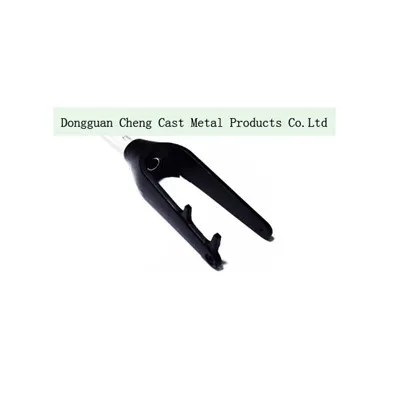
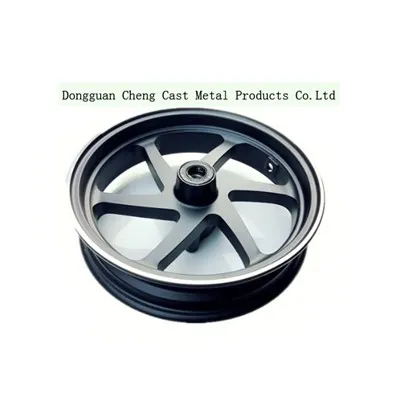
Q: What is aluminum magnesium alloy die-casting part?
A: A manufacturing process that produces accurately, defined, smooth and textured-surfaced metal parts. Accomplished by forcing molten metals into a mold form due to high-pressure systems. Corrosion resistant. Highly conductive. Have a good stiffness and strength-to-weight ratio.
Q: What are the advantages of aluminum magnesium alloy die-casting part?
A: Magnesium is a common element added to a wide range of alloys because it can add strength without inhibiting the positive characteristics of the base metal. With magnesium in aluminum, the aluminum has added strength, corrosion resistance and good weldability characteristics.
Q: What is aluminum magnesium alloy die-casting part used for?
A: The range of applications is immense when using aluminum alloys that have magnesium added. Aluminum with magnesium can be formed into train bodies, truck bodies, armored vehicles, building construction, pressure vessels, chemical tankers, ships, and lids on aluminum beverage cans.
Q: What is the best aluminum magnesium alloy die-casting part?
A: Alloy A380 has better than average machining characteristics. Alloy 218, with magnesium the major alloying element, exhibits among the best machinability. Alloy 390, with the highest silicon content and free silicon constituent, exhibits the lowest.
Q: What is the difference between cast alloy and alloy?
A: The fundamental difference between cast and wrought alloy is easy to understand: cast alloy is the alloy that was melted in a furnace and poured into a mold and allowed to cool. Wrought alloy is when the alloy is worked in the solid form (stamping, bending, rolling, extrusion, etc.)
Q: What are the 3 basic methods of aluminum magnesium alloy die-casting parts?
A: Three primary metal casting methods can be used to cast aluminum: die casting, permanent mold casting, and sand casting.
Q: What is the raw material for aluminum magnesium alloy die-casting part?
A: The raw material for aluminum magnesium alloy die-casting parts is largely recycled aluminum cans and other articles. The first step in an aluminum magnesium alloy die-casting part operation is to crush, shred, and sort the raw material.
Q: How strong is aluminum magnesium alloy die-casting part?
A: Al-Mg alloys possess moderate strength, high corrosion resistance, and appropriate weldability, which can be strengthened by work hardening and solid-solution strengthening.
Q: What is the process of die casting aluminum alloy?
A: Aluminum alloys for die casting are melted in a furnace and then injected into the dies by the die casting machine. Once the liquid aluminum is injected into the dies, it rapidly cools and solidifies into the final cast part.
Q: Why is aluminum magnesium alloy good for die casting?
A: Aluminum magnesium alloys are an excellent choice for die casting as they create lightweight parts with a wide range of finishing options. The alloys have excellent corrosion resistance and can make thin-walled parts due to the alloy's high dimensional stability.
Q: How to design the draft angle of aluminum magnesium alloy die-casting parts?
A: One of the most critical design features in die casting is adding a draft or draft angle. The draft is the taper applied to the surfaces on the part perpendicular to the parting line and, consequently, on the die cavity. It is vital to include the correct amount of draft. Otherwise, parts can get stuck in the die, causing damage to the part and, worse, the die. It is best practice to consider drafts early in the design process to avoid significant redesign later.
Drafts start on the parting line, and for most geometric features in aluminum magnesium alloy die-casting part, a common draft angle of 2.0 degrees can be applied. The amount of draft will have different calculations depending on whether they are on an inside wall, outside wall or hole.
Q: Is the wall thickness of aluminum magnesium alloy die-casting parts uniform?
A: The wall thickness throughout the aluminum magnesium alloy part should be uniform or as consistent as possible. This reduces the chance of distortion when the part cools and shrinks. Furthermore, a constant wall thickness helps to ensure that the die fills evenly. An inconsistent wall thickness can result in cold shuts - a defect whereby the molten aluminum magnesium alloy cools and solidifies before filling the mould.
Q: How to cast aluminum parts?
A: Most aluminum casting processes involve heating the aluminum (and other metal) and pouring them in molten form into a prepared mold with the desired product design. Afterward, the molten aluminum cools down, solidifies, and takes the shape of the cavity.
Q: What is the process of magnesium alloy casting?
A: In the hot chamber die casting method, the molten metal is held in an enclosed steel crucible, under a protective atmosphere. A valve allows a controlled volume of molten metal into the gooseneck that is immersed in the molten metal. A plunger injects this metal into the cavity of the die through a nozzle.
Q: What is die casting alloy?
A: Die casting is a metal casting process that involves feeding molten nonferrous alloys into dies under high pressure and at high speed to rapidly create molded products. The main materials used in die casting are alloys of aluminum, magnesium and zinc.
Q: Is magnesium alloy same as aluminum?
A: While magnesium is lighter, has a lower melting point, and better thermal conductivity, aluminum is stronger and more ductile. When choosing a material for die casting, it is vital to take into account the particular needs of the application and carefully evaluate the advantages and disadvantages of each metal option.
Q: Why is aluminum magnesium alloy good for casting?
A: There are many benefits to casting with magnesium. Not only is magnesium the lightest of all the structured materials but it has excellent stiffness and strength-to-weight ratios. Additionally, it has outstanding EMI and RFI shielding properties, perfect for connectors and electrical housings.
Q: Does aluminum magnesium alloy die-casting part rust?
A: Aluminum magnesium alloy die-casting part is commonly alloyed together with aluminium to provide additional corrosion resistance, but it remains susceptible to corrosion in carbon dioxide or sodium chloride containing environments.
Q: What are the components of aluminum magnesium alloy die-casting part?
A: The main die casting alloys are: zinc, aluminium, magnesium, copper, lead, and tin; although uncommon, ferrous die casting is also possible. Specific die casting alloys include: zinc aluminium; aluminium to, e.g. The Aluminum Association (AA) standards: AA 380, AA 384, AA 386, AA 390; and AZ91D magnesium.
Q: What are the two types of aluminum magnesium alloy die-casting?
A: The two main types of die casting processes are hot-chamber and cold-chamber die casting. Variations on these two types of die casting include: Low-pressure die casting. Vacuum die casting.