Call Us: +86-769-22654041Email: cz004@czjs168.com
enLanguage

Auto Parts

Why Choose Us?

Rich Experience

Dongguan Chengzhu Metal Products Co., Ltd. was established on April 28, 2013. It is an enterprise integrating the molding, research and development, production and marketing of light alloy materials.

One-stop Solution

The business scope includes the manufacturing of precision die casting molds for magnesium alloys, aluminum alloys and other light alloys, and the R&D, design, production and sales of die castings.

Widely Used Products

Products are mainly used in medical equipment, unmanned aircraft parts, robot/manipulator parts, new energy vehicle parts, motorcycles, electric vehicles, Motorized scooter, electric tools, sports equipment, 3C, LED, industrial parts and other fields.


What Are the Products of Auto Parts

Automotive Basic Chassis Steering System Castings

Automotive Radar System Castings

Air Conditioner Controller Shell Parts

Car Audio Cooling Case

Car Navigation Shell

Automotive Headlight Castings


What Is the Automotive Basic Chassis Steering System


The steering system of your car is everything from the steering wheel to the steering shaft, rack and pinion (also known as the gearbox), all the way to the linkage which connects to the wheels themselves.


What Are the Different Types of Automotive Basic Chassis Steering System
 

Automotive basic chassis steering systems are a critical component in the functioning of any vehicle. They allow drivers to control the direction of the vehicle and ensure safe maneuvering on the road. There are various types of steering systems, each with its own unique components and working mechanisms.

Rack and pinion steering system

This is the most common type of steering system used in modern vehicles. The system consists of a gear-like mechanism, known as the rack and pinion, that connects the steering wheel to the wheels. The steering wheel rotates, which in turn moves the pinion gear. The pinion gear then moves the rack, which then turns the wheels. This type of steering system is highly efficient, easy to maintain, and provides precise control over the vehicle's direction.

Power steering system

Many modern vehicles come equipped with power steering systems, which use hydraulic pressure to make steering easier and more convenient. The system consists of a pump, hoses, and a power steering gear. The pump is driven by a belt connected to the engine and provides the necessary hydraulic pressure to turn the steering wheel with ease. Power steering systems make it easier for drivers to maneuver the vehicle, especially during low-speed driving conditions.

Recirculating ball steering system

This type of steering system was popular in older vehicles and is still used in some trucks and suvs today. It consists of a gear, ball studs, and worm gear. The steering wheel turns the worm gear, which then moves the ball studs. The ball studs then rotate the gear, which in turn moves the wheels. While this type of steering system is less precise than rack and pinion or power steering systems, it is durable and can handle heavy loads.


How the Automotive Basic Chassis Steering System Works


The automotive basic chassis steering system converts the rotation of the steering wheel into a swivelling movement of the road wheels in such a way that the steering-wheel rim turns a long way to move the road wheels a short way.


The system allows a driver to use only light forces to steer a heavy car. The rim of a 15 in. (380 mm) diameter steering wheel moving four turns from full left lock to full right lock travels nearly 16 ft (5 m), while the edge of a road wheel moves a distance of only slightly more than 12 in. (300 mm). If the driver swivelled the road wheel directly, he or she would have to push nearly 16 times as hard.


The steering effort passes to the wheels through a system of pivoted joints. These are designed to allow the wheels to move up and down with the suspension without changing the steering angle.


They also ensure that when cornering, the inner front wheel - which has to travel round a tighter curve than the outer one - becomes more sharply angled.


The joints must be adjusted very precisely, and even a little looseness in them makes the steering dangerously sloppy and inaccurate.


There are two automotive basic chassis steering systems in common use - the rack and pinion and the steering box.


On large cars, either system may be power assisted to reduce further the effort needed to move it, especially when the car is moving slowly.


How are the castings of the basic chassis steering system castings of automobiles produced?


To successfully execute the automotive basic chassis steering system casting die-casting process, the following steps are involved:

Mold Design

Creation of highly detailed and accurate 3D models of the molds. To further enhance mold design feasibility, mold flow analysis is utilized. This involves simulating the flow of molten metal into the mold cavity to identify potential issues.


Mold Preparation

Die casting relies on the creation of specialized molds, often referred to as "dies." These molds consist of two halves, the cavity and the core, and are typically constructed from hardened steel.

Injection

The molten metal is injected into the mold cavity at high speed and pressure through a runner system. The pressure ensures that the metal completely fills the mold and takes its shape.

Cooling and Ejection

After injection, the metal cools and solidifies within the closed die. Cooling time can vary depending on the alloy used. Once cooled, the mold is opened, and the ejector pins push the part out of the mold cavity.

Post-Processing

The cast parts may undergo additional processes such as machining, surface finishing, or heat treatment to achieve the desired final product.


Aluminum alloy grades for automotive basic chassis steering system castings


Aluminum is one of the main die-casting metals, and aluminum alloys are used in cold-chamber die casting. These alloys typically contain silicon, copper, and magnesium. Aluminum die-casting alloys are lightweight and offer good dimensional stability, making them a good choice for complex, fine-featured parts. Other advantages of aluminum casting include good corrosion resistance, temperature resistance, and thermal and electrical conductivity.
Common die-casting aluminum alloys include:

380: A general-purpose aluminum alloy that balances castability with good mechanical properties. It is used in a wide variety of products, including engine brackets, furniture, electronics enclosures, frames, handles, gearbox cases, and power tools.


390: An alloy with excellent wear resistance and vibration resistance. It was developed specifically for the die casting of automotive engine blocks and is also suitable for valve bodies, impellers, and pump housings.


413: An aluminum alloy with excellent casting properties. It has good pressure tightness and is therefore used for products like hydraulic cylinders, as well as architectural parts and food and dairy industry equipment.


443: The most ductile of die-casting aluminum alloys, this alloy is suitable for consumer goods, especially those that require plastic deformation after casting.


518: A ductile aluminum alloy with good corrosion resistance.


productcate-1-1


What Is an Automotive Radar System

An automotive radar system is a radio detection and ranging (radar) vehicle sensor that uses radio waves to measure the positions and trajectories of vehicles, people, animals, and other objects around it.


It works by transmitting radio waves in the direction of interest. They bounce off objects in the vicinity and return to the sensor. The sensor then compares the characteristics of these reflected waves against the transmitted waves to infer the positions and movements of the objects.


Such automotive radar system systems enable superior driver assistance, even autonomous driving, by helping the vehicle remain aware of all the obstacles around it in real time.


How Is the Automotive Radar System Produced


The automotive radar system casting process involves five steps. Each of them plays an important role in ensuring the final product meets its required specifications.
The following is a detailed overview of the steps.

Step 1: Clamping
The first step begins with cleaning and lubricating the die before it is clamped and closed under high pressure.
Clamping ensures that the die is securely sealed and the molten metal doesn't leak out during the casting process.


Step 2: Injection
Once the die is clamped, the metal is melted and poured into the shot chamber.
The molten metal is then forced into the die cavity under high pressure, which makes it take the shape of the mold.
The molten metal must be injected at the right temperature, speed, and pressure to achieve optimal results.


Step 3: Cooling
While still clamped, the metal is allowed to cool down and solidify into the shape of the mold design.
The cooling process can be accelerated by circulating a coolant (i.e., water or oil) through the die.


Step 4: Ejection
After the metal has cooled, the die is unclamped, and the ejection mechanism (ejector pin) is allowed to push the casting out of the die.
The injection pins help mitigate any damage to the casting while it is removed from the die.


Step 5: Trimming
In the final step, excess metal is removed from the finished product using a trimming tool or saw.


Our Factory


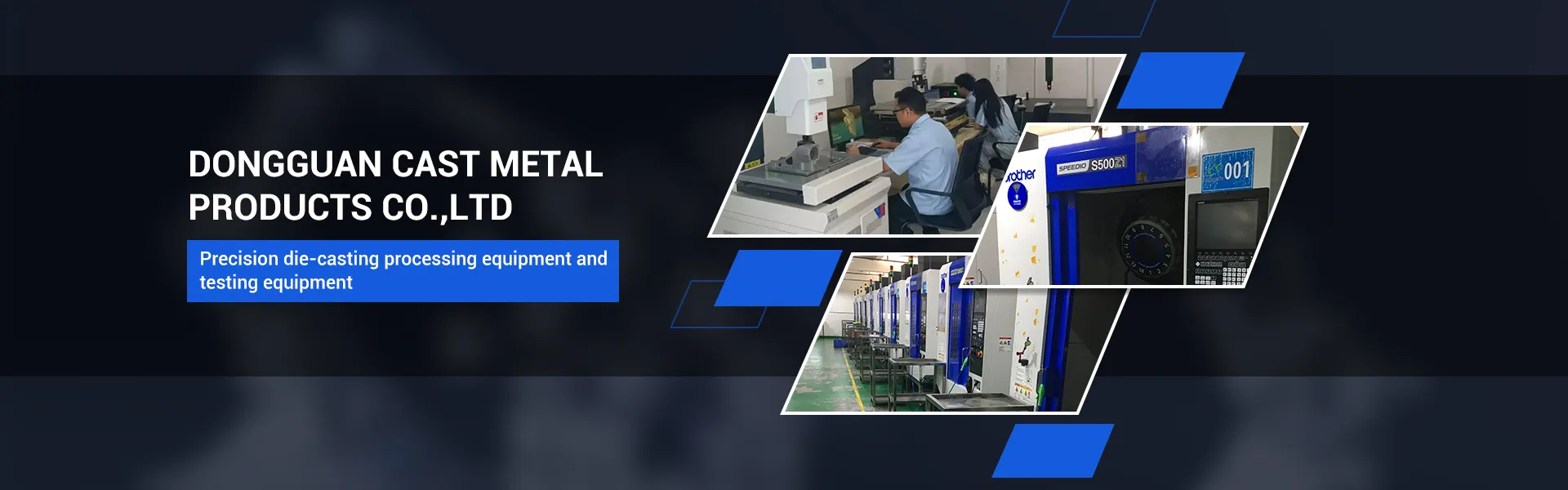
Dongguan Chengzhu Metal Products Co., Ltd. was established on April 28, 2013. Its registered address is located at No. 1, 1st Street, Fujie, Tangqiu Village, Liaobu, Dongguan City. Its legal representative is Zhao Chenhuang, with a registered capital of 3 million yuan. It is an enterprise integrating the molding, research and development, production and marketing of light alloy materials, and a well-known enterprise in Guangdong Province producing light alloy products.
The business scope includes the manufacturing of precision die casting molds for magnesium alloys, aluminum alloys and other light alloys, and the R&D, design, production and sales of die castings, which are mainly used in medical equipment, unmanned aircraft parts, robot/manipulator parts, new energy vehicle parts, motorcycles, electric vehicles, Motorized scooter, electric tools, sports equipment, 3C, LED, industrial parts and other fields.


productcate-1-1


FAQ


Q: What are the 5 functions of automotive basic chassis steering system?

A: Following are some important functions of a car steering system:
Sets your car's direction.
Gives stability to your car.
Avoids vibrations of steering wheel.
Reduce tire wear.
Keeps your car's front wheels straight.

Q: How important is the automotive basic chassis steering system?

A: Steering is the system in charge of controlling the vehicle's trajectory, whether in a straight line or in turning maneuvers. It is an essential component of the automobile to maintain stability and control, and for the safety of passengers.

Q: What are the four main parts of automotive basic chassis steering system?

A: What are automotive basic chassis steering system types, functions, and components
steering system components:
Steering wheel: It is the control wheel to steer a vehicle by the driver.
Steering linkage: The steering wheels are turned by the steering linkage.
Steering shaft: The steering shaft is fitted inside the hollow steering column.
Steering gear.

Q: What is the main function of automotive basic chassis steering system?

A: Automotive basic chassis steering system is a mechanical device installed on a vehicle that reduces the effort needed to turn the steering wheel, making it easier for the vehicle to turn or maneuver at low speeds.

Q: What is the most common problem in automotive basic chassis steering system?

A: Common steering problems can include: Difficulty in turning the wheel, especially at rest or lower speeds. This may be caused by a problem with power steering, low power steering fluid, a fluid leak, or worn parts. Lack of response from the steering wheel or looseness.

Q: How do automotive basic chassis steering systems work?

A: The steering system converts the rotation of the steering wheel into a swivelling movement of the road wheels in such a way that the steering-wheel rim turns a long way to move the road wheels a short way. The system allows a driver to use only light forces to steer a heavy car.

Q: What is an automotive radar system?

A: An automotive radar system is a radio detection and ranging (radar) vehicle sensor that uses radio waves to measure the positions and trajectories of vehicles, people, animals, and other objects around it.
It works by transmitting radio waves in the direction of interest. They bounce off objects in the vicinity and return to the sensor. The sensor then compares the characteristics of these reflected waves against the transmitted waves to infer the positions and movements of the objects.
Such automotive radar system systems enable superior driver assistance, even autonomous driving, by helping the vehicle remain aware of all the obstacles around it in real time.

Q: How is the automotive radar system produced?

A: The automotive radar system casting process involves five steps. Each of them plays an important role in ensuring the final product meets its required specifications.
The following is a detailed overview of the steps.
Step 1: Clamping
The first step begins with cleaning and lubricating the die before it is clamped and closed under high pressure.
Clamping ensures that the die is securely sealed and the molten metal doesn't leak out during the casting process.
Step 2: Injection
Once the die is clamped, the metal is melted and poured into the shot chamber.
The molten metal is then forced into the die cavity under high pressure, which makes it take the shape of the mold.
The molten metal must be injected at the right temperature, speed, and pressure to achieve optimal results.
Step 3: Cooling
While still clamped, the metal is allowed to cool down and solidify into the shape of the mold design.
The cooling process can be accelerated by circulating a coolant (i.e., water or oil) through the die.
Step 4: Ejection
After the metal has cooled, the die is unclamped, and the ejection mechanism (ejector pin) is allowed to push the casting out of the die.
The injection pins help mitigate any damage to the casting while it is removed from the die.
Step 5: Trimming
In the final step, excess metal is removed from the finished product using a trimming tool or saw.

Q: What are the fundamentals of automotive radar system?

A: Automotive radar systems are used to detect the speed and range of objects in the vicinity of the car. An automotive radar consists of a transmitter and a receiver. The transmitter sends out radio waves that hit an object and bounce back to the receiver, determining the objects' distance, speed and direction.

Q: What are the 4 components of automotive radar system?

A: Automotive radar system is made up of a transmitter, a receiver, an antenna and a display. The transmitter creates the radio waves; these radio waves are invisible forms of energy. The antenna sends the waves out into the air and when the waves hit an object they reflect and bounce back to the antenna.

Q: Why is automotive radar system casting so expensive?

A: Although investment casting can achieve intricate details and superior surface finishes, it often incurs higher tooling costs due to the complexity of the process and the need for precise wax pattern creation. Additionally, the materials used in investment casting, such as ceramic shells, contribute to overall costs.

Q: What is the tolerance for automotive radar system casting?

A: In general, the tolerance range for most dimensions in automotive radar system casting is +/- 0.005 inches to +/- 0.015 inches. However, some parts may require tighter tolerances, which can range from +/- 0.001 inches to +/- 0.003 inches.

Q: How sustainable is aluminum magnesium alloy casting?

A: The materials used in aluminum magnesium alloy casting are easily recyclable. Aluminum, the most commonly used metal in aluminum magnesium alloy casting, is cost effective, energy efficient, and easy to recycle.

Q: What frequency is automotive radar system?

A: At the same time that demand for automotive radar sensors is rising, the sensors themselves are changing. This make sense, as the transition from 24GHz to 77GHz provides better accuracy and better resolution in a smaller package. With this in mind, it is easy to see why automotive radars are moving from 24GHz to 77GHz.

Q: What is an automotive radar system?

A: An automotive radar system is a radio detection and ranging (radar) vehicle sensor that uses radio waves to measure the positions and trajectories of vehicles, people, animals, and other objects around it.
It works by transmitting radio waves in the direction of interest. They bounce off objects in the vicinity and return to the sensor. The sensor then compares the characteristics of these reflected waves against the transmitted waves to infer the positions and movements of the objects.
Such automotive radar system systems enable superior driver assistance, even autonomous driving, by helping the vehicle remain aware of all the obstacles around it in real time.

Q: Why are non-ferrous metals used in automotive radar system casting?

A: Corrosion Resistance: Non-ferrous metals like aluminum, copper, and bronze exhibit excellent corrosion resistance, making them suitable for outdoor and marine applications. This property helps extend the lifespan of components exposed to harsh environments.

Q: Why is aluminium used in automotive radar system casting?

A: Automotive radar system casting alloys are lightweight and possess high dimensional stability for complex part geometries and thin walls. Aluminum withstands good corrosion resistance and mechanical properties as well as high thermal and electrical conductivity, making it a good alloy for automotive radar system casting.

Q: How long does a thermal imager alloy die-cast housing last?

A: That's why casting dies typically only last for 100,000-150,000 aluminum parts and 200,000-300,000 magnesium parts before significant repairs or replacements are needed. (Contrast that with a well-maintained steel injection mold, which can produce a million shots before significant repairs or replacement are required.)

Q: What is the pressure for automotive radar system casting?

A: There are two forms of pressure automotive radar system casting: low-pressure automotive radar system casting (LPDC) and high-pressure automotive radar system casting (HPDC). With LPDC, the metal is injected into the mold at low pressures, usually between 2–15 psi. HPDC injects the alloy into the mold at high pressures, usually between 1,500 and 25,400 psi.

Q: What is the melting point of automotive radar system casting?

A: Aluminum alloys have a high melting point, transforming from solid into liquid at about 1150°F to 1300°F (621°C to 704°C). Zinc alloys have a lower melting point at less than 725°F (385°C). Zinc-Aluminum (ZA) alloys have a slightly higher melting range of 800°F to 900°F (427°C to 482°C).

We're professional auto parts manufacturers in China, specialized in providing high quality OEM service. We warmly welcome you to buy high-gradeauto parts made in China here from our factory.

Car Audio Cooling Case, Automotive Basic Chassis Steering System Castings, window parts

(0/10)

clearall