Call Us: +86-769-22654041Email: cz004@czjs168.com
enLanguage

Optical Instruments

Why Choose Us?

Rich Experience

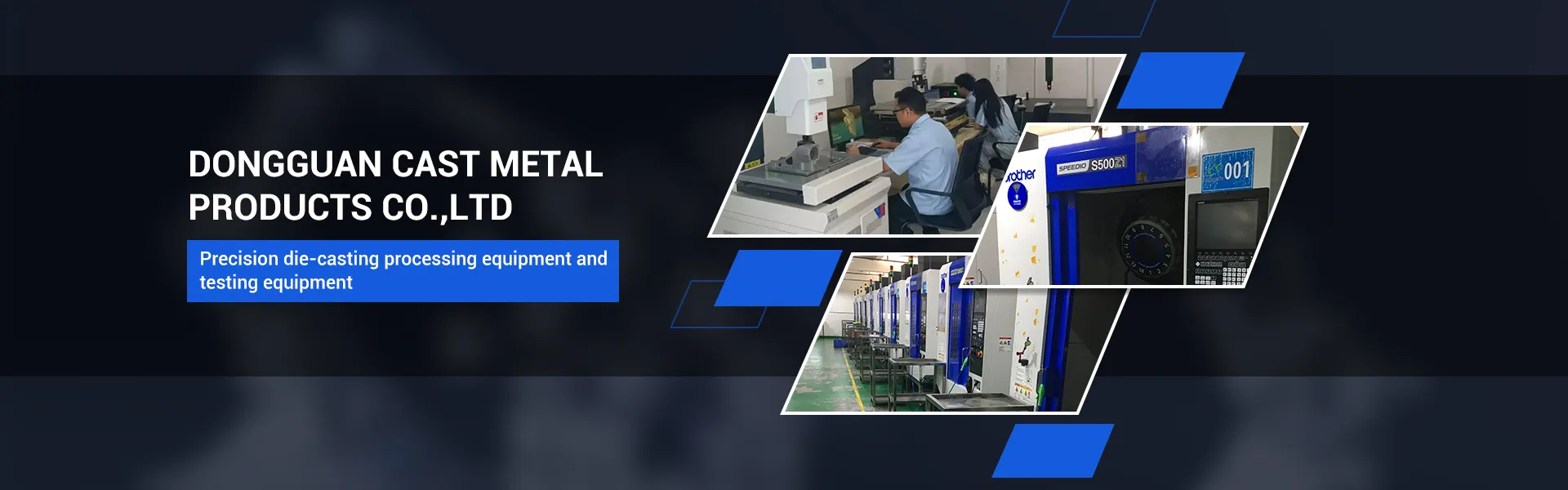
Dongguan Chengzhu Metal Products Co., Ltd. was established on April 28, 2013. It is an enterprise integrating the molding, research and development, production and marketing of light alloy materials.

One-stop Solution

The business scope includes the manufacturing of precision die casting molds for magnesium alloys, aluminum alloys and other light alloys, and the R&D, design, production and sales of die castings.

Widely Used Products

Products are mainly used in medical equipment, unmanned aircraft parts, robot/manipulator parts, new energy vehicle parts, motorcycles, electric vehicles, Motorized scooter, electric tools, sports equipment, 3C, LED, industrial parts and other fields.


What Are the Products of Optical Instruments


Digital Camera Magnesium Alloy Die-Casting Case
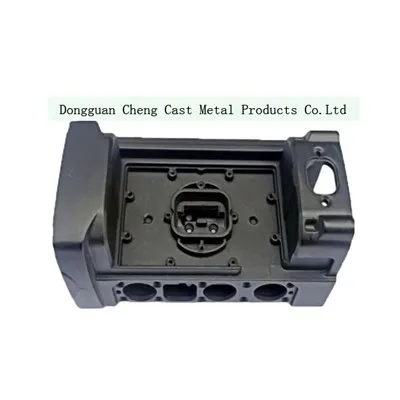
Digital camera magnesium alloy die-casting cases are widely used in the manufacturing of high-quality cameras. These cases are produced using magnesium alloys, specifically chosen for their lightweight properties, durability, and excellent heat dissipation capabilities.


Printer Aluminum Alloy Die-Casting Accessories
The housing of the printer, which encases the internal components and provides the outer structure, can be manufactured using aluminum alloy die-casting. Aluminum alloy offers lightweight construction, durability, and the ability to achieve intricate and precise designs, making it suitable for creating sleek and robust printer casings.


Projector Aluminum Magnesium Alloy Casting
Aluminum-magnesium alloy castings offer a lightweight solution for projector components. This is particularly advantageous for projectors, as they need to be portable and easy to handle. The lightweight nature of these castings allows for easier transportation and installation of projectors.


Thermal Imager Alloy Die-Cast Housing
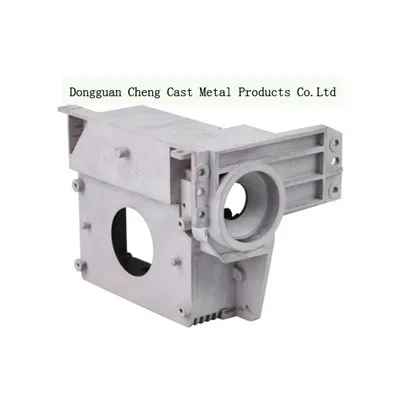
Thermal imagers are devices used to detect and visualize heat patterns and temperature variations in various applications. The housing of a thermal imager plays a crucial role in protecting the internal components and ensuring optimal performance. Die-casting is a common manufacturing process used to produce the housing of thermal imagers.


Telescope Magnesium Alloy Die-Cast Housing
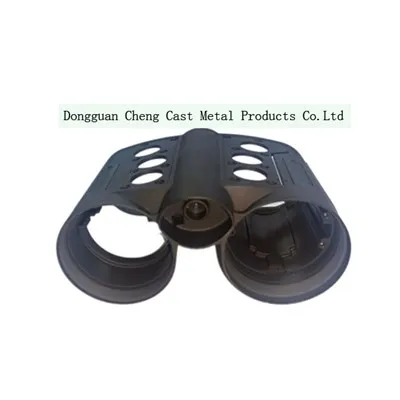
Magnesium alloy is known for its lightweight properties, making it an ideal material for telescope housings. The use of magnesium alloy helps reduce the overall weight of the telescope, making it easier to handle and transport.
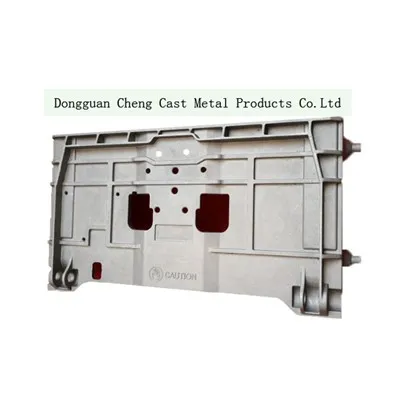
 

The Steps Involved in the Production of Aluminum Alloy Die-Casting Accessories


High pressure is vital for injecting molten metal into a die mold during aluminum alloy die-casting accessories. Here are the multi-step processes involved in aluminum alloy die-casting accessories.
Create Mold
First, computer-aided design (CAD) software is employed to design the die mold. This software allows the creation of a three-dimensional (3D) model of the die mold. Once the design is finalized, the actual die mold can be created. This involves machining the mold from a metal block using a CNC machine. After cutting, the mold usually need to a heat-treating process to harden the mold.


Clamping
Clamping is the initial stage in aluminum alloy die-casting accessories. To ensure an efficient injection and removal of the solidified product, it's important to lubricate and clean the die beforehand to eliminate any impurities. Once it's clean and lubricated, apply strong pressure to clamp and close the die.


Casting
For the injection of melted metal, it should be poured into the shot chamber. This step varies depending on the process in use. For instance, in cold chamber aluminum alloy die-casting accessories and hot chamber aluminum alloy die-casting accessories. It is crucial to note that a high pressure produced by a hydraulic system is necessary for this stage.


Cooling
After the casting has been set, it must be cooled and removed from the mold. This step is essential for maintaining the casting's structural integrity. Manufacturers usually employ forced or natural cooling during this stage of aluminum alloy die-casting accessories. However, the type of cooling used often depends on the size and complexity of the casting.


Ejection
Following cooling, manufacturers use ejector pins to expel the casting from the mold chamber and remove it from the mold. Ensure that the final product is solid before ejecting it.


Trimming
The final stage involves removing any excess metal that might be present in the sprue and runner of the finished product. Trimming can be done with a saw, grinder, trim die, or other tools. The beauty of the process is that the removed parts can be recycled and reused. During this process, to prevent damage to the casting, one must pay great attention and care.


Printer Aluminum Alloy Die-casting Accessories


What Is Aluminum Alloy Die-Casting?

Aluminum alloy die-casting is a highly efficient manufacturing process that involves forcing molten aluminum into a mold cavity under high pressure. This method is known for its speed and precision, producing components with complex shapes and fine details. The resulting parts exhibit excellent surface finish and dimensional accuracy.


The lightweight nature and strength provided by die casting enhance product performance, leading to innovations in design and functionality. Additionally, die casting can work with various aluminum alloys to customize properties, ensuring the final product meets specific requirements.


The Forming Principle of Printer Aluminum Alloy Die-Casting Accessories


Printer aluminum alloy die-casting accessories are formed using molds combined with die-casting machines and aluminum alloys. The die-casting process involves using high pressure to flow molten metal into a precision metal mold cavity at high speed. The molten metal is then cooled and solidified under pressure to form a casting. There are two basic methods for die casting: cold chamber and hot chamber.


In cold chamber die casting, the molten metal is poured into the press chamber manually or automatically. The injection punch then advances to hydraulically press the metal into the cavity. In hot chamber die casting, the pressure chamber is perpendicular to the crucible, and the molten metal flows into the pressure chamber automatically through a feed port. The injection punch moves downward to push the molten metal into the cavity through the gooseneck. After the molten metal solidifies, the die-casting mold is opened, and the casting is removed to complete the die-casting process.


How Long Does a Aluminum Magnesium Alloy Casting Cycle Take
 

The aluminum magnesium alloy casting cycle time depends on the weight of the components. While typically a very quick process, aluminum magnesium alloy casting can take from a few seconds for small components to a few minutes for large, heavier components. The quick cycle times allows you to complete high production runs as efficiently as possible.

Aluminum magnesium alloy casting methods

While the overall process of aluminum magnesium alloy casting remains the same, there are 2 methods that are used when injecting the molten metal into the die cavity. Hot chamber and cold chamber methods are used for different metals, largely dependent upon their melting points.

Hot chamber aluminum magnesium alloy casting method

Hot chamber aluminum magnesium alloy casting is a method where the metal is an internal process. The metal is heated inside the casting chamber.
Low melting temperature alloys such as magnesium, lead, and zinc are ideal for hot chamber aluminum magnesium alloy casting. This method is ideal for alloys that will not erode metal cylinders or plungers.
Advantages of hot chamber aluminum magnesium alloy casting include:
● Longer die life. This is due to the lower melting points of alloys used with this method.
● Reduced porosity
● Fast aluminum magnesium alloy casting cycle times when compared to cold chamber casting
● Efficient die designs

Cold chamber aluminum magnesium alloy casting method

Cold chamber aluminum magnesium alloy casting is where the metal is melted/heated in a separate furnace and then transferred to the casting chamber. The molten metal is ladled into the casting machine and then then shot into the die cavity via a hydraulic plunger.
Cold chamber aluminum magnesium alloy casting method is perfect for metals with a high temperature melting point like aluminum, brass, or copper.
Advantages of cold chamber aluminum magnesium alloy casting include:
● Produces denser metal castings
● Low maintenance cost
● Higher level of quality control due to the injection process


Printer Aluminum Alloy Die-Casting Accessories Die-Casting Protection


The first step to keeping your employees safe is ensuring they are using proper ppe. This means using masks and gloves, as well as safety shoes and glasses. If you don't have the ppe available at your facility, consider purchasing a set of basic respiratory protection for each employee who works in die casting.


As a general rule of thumb, everyone should be wearing safety gear whenever they're around die casting procedure that produces fumes or other hazardous materials. You might also consider having a dedicated area where employees can change into their protective equipment before entering any areas where there's a potential risk for exposure (such as an area with high concentrations of sulfuric acid).


In die casting, there are many safety measures that should be taken apart from hand gloves and face shields. In order to avoid any serious accidents, these measures include the use of personal protective equipment (PPE), proper work practices, and the use of appropriate ppe for certain advanced tasks.


The next step to keeping your employees safe is to make sure they are using proper ppe when they start any complex task. This means using masks and gloves, as well as safety shoes and glasses. If you don't have the ppe available at your facility, consider purchasing ppe and a set of basic respiratory protection for each employee who works in die casting.


Wearing protective gear is the primary safety factor for any operator but secondary factors also play an important role in benefitting both company and employees. The following secondary factors will result in improving overall safety for the major die casting manufacturing industries around the globe.


Our Factory


Dongguan Chengzhu Metal Products Co., Ltd. was established on April 28, 2013. Its registered address is located at No. 1, 1st Street, Fujie, Tangqiu Village, Liaobu, Dongguan City. Its legal representative is Zhao Chenhuang, with a registered capital of 3 million yuan. It is an enterprise integrating the molding, research and development, production and marketing of light alloy materials, and a well-known enterprise in Guangdong Province producing light alloy products.
The business scope includes the manufacturing of precision die casting molds for magnesium alloys, aluminum alloys and other light alloys, and the R&D, design, production and sales of die castings, which are mainly used in medical equipment, unmanned aircraft parts, robot/manipulator parts, new energy vehicle parts, motorcycles, electric vehicles, Motorized scooter, electric tools, sports equipment, 3C, LED, industrial parts and other fields.


productcate-1-1


FAQ


Q: How can you be safe while projector aluminum magnesium alloy casting?

A: Top 5 safety measures in aluminum alloy die casting
Use of personal protective equipment – aluminum alloy die casting.
Do not use any equipment or materials that are defective – aluminum alloy die casting.
Maintaining a clean and organized workplace – aluminum alloy die casting.
Implementing a first aid program – aluminum alloy die casting.
Have an emergency response team – aluminum alloy die casting.

Q: Is aluminum alloy die casting fast or slow?

A: Due to the quick and repeatable nature of this process, aluminum alloy die casting is the fastest process when it comes to producing precise non-ferrous metal parts.

Q: What is the pressure for aluminum alloy die casting?

A: There are two forms of pressure aluminum alloy die casting: low-pressure aluminum alloy die casting (LPDC) and high-pressure aluminum alloy die casting (HPDC). With LPDC, the metal is injected into the mold at low pressures, usually between 2–15 psi. HPDC injects the alloy into the mold at high pressures, usually between 1,500 and 25,400 psi.

Q: How accurate is thermal imager alloy die-cast housing?

A: Advantages of aluminum alloy die casting: Excellent dimensional accuracy (dependent on casting material, but typically 0.1 mm for the first 2.5 cm (0.004 inch for the first inch) and 0.02 mm for each additional centimeter (0.002 inch for each additional inch).

Q: What is the maximum thickness for thermal imager alloy die-cast housing?

A: However, as a general guideline, the maximum wall thickness for aluminum and zinc aluminum alloy die casting is typically around 25mm (1 inch). This maximum thickness is not a hard and fast rule and may need to be adjusted based on the specific requirements of the application.

Q: How long does a thermal imager alloy die-cast housing last?

A: That's why casting dies typically only last for 100,000-150,000 aluminum parts and 200,000-300,000 magnesium parts before significant repairs or replacements are needed. (Contrast that with a well-maintained steel injection mold, which can produce a million shots before significant repairs or replacement are required.)

Q: Can aluminum alloy die casting be reused?

A: Aluminum die cast products used in automobiles and other vehicles are recyclable after disposal, and are reused as secondary aluminum alloys.

Q: Why is aluminum magnesium alloy casting good?

A: Aluminum magnesium alloy casting is characterized by high dimensional accuracy and allows for the mass production of thin-walled products with complex shapes. aluminum magnesium alloy casting also has the advantage of producing smooth casting surfaces requiring less machining after molding.

Q: Why is aluminum alloy die casting so expensive?

A: Although investment casting can achieve intricate details and superior surface finishes, it often incurs higher tooling costs due to the complexity of the process and the need for precise wax pattern creation. Additionally, the materials used in investment casting, such as ceramic shells, contribute to overall costs.

Q: How sustainable is aluminum magnesium alloy casting?

A: The materials used in aluminum magnesium alloy casting are easily recyclable. Aluminum, the most commonly used metal in aluminum magnesium alloy casting, is cost effective, energy efficient, and easy to recycle.

Q: What is the minimum radius for aluminum magnesium alloy casting?

A: Generally, the fillet radius of aluminum magnesium alloy castings should not be less than 1 mm, and the minimum fillet radius should be 0.5 mm. – The radius and fillet can increase structural integrity. – The inner radius of the aluminum magnesium alloy casting part should be at least the wall thickness.

Q: Why is aluminium used in aluminum alloy die casting?

A: Aluminum alloy die casting alloys are lightweight and possess high dimensional stability for complex part geometries and thin walls. Aluminum withstands good corrosion resistance and mechanical properties as well as high thermal and electrical conductivity, making it a good alloy for aluminum alloy die casting.

Q: Why are non-ferrous metals used in aluminum alloy die casting?

A: Corrosion Resistance: Non-ferrous metals like aluminum, copper, and bronze exhibit excellent corrosion resistance, making them suitable for outdoor and marine applications. This property helps extend the lifespan of components exposed to harsh environments.

Q: What is the melting point of aluminum alloy die casting?

A: Aluminum alloys have a high melting point, transforming from solid into liquid at about 1150°F to 1300°F (621°C to 704°C). Zinc alloys have a lower melting point at less than 725°F (385°C). Zinc-Aluminum (ZA) alloys have a slightly higher melting range of 800°F to 900°F (427°C to 482°C).

Q: What is the tolerance for aluminum alloy die casting?

A: In general, the tolerance range for most dimensions in aluminum alloy die casting is +/- 0.005 inches to +/- 0.015 inches. However, some parts may require tighter tolerances, which can range from +/- 0.001 inches to +/- 0.003 inches.

Q: What are the parameters of aluminum magnesium alloy casting?

A: Pouring temperature, high-speed switching point positions, and critical injection speed are selected as the three process parameters of the experimental study. The selected process parameters respectively have an impact on the solidification state and filling process.

Q: Which metal is not commonly used for aluminum alloy die casting?

A: It is not feasible to die-cast ferrous metals. But, to be honest, it is not impossible either. The main reason is the high melting temperature of ferrous metals. It makes ferrous metals hard to handle.

Q: How strong is aluminum magnesium alloy casting?

A: It has the strongest strength to withstand any load-bearing. It is quite beneficial for materials that require high-yield strength. It is best for complex castings.

Q: Is projector aluminum magnesium alloy casting cost effective?

A: Aluminum alloy die casting is a relatively inexpensive manufacturing process due to its high levels of repeatability. Once a bespoke cast has been made for your component, it's simply a case of using this cast over and over to create identical parts.

Q: How long does a aluminum magnesium alloy casting cycle take?

A: The aluminum magnesium alloy casting cycle time depends on the weight of the components. While typically a very quick process, aluminum magnesium alloy casting can take from a few seconds for small components to a few minutes for large, heavier components. The quick cycle times allows you to complete high production runs as efficiently as possible.
1. Aluminum magnesium alloy casting methods
While the overall process of aluminum magnesium alloy casting remains the same, there are 2 methods that are used when injecting the molten metal into the die cavity. Hot chamber and cold chamber methods are used for different metals, largely dependent upon their melting points.
2. Hot chamber aluminum magnesium alloy casting method
Hot chamber aluminum magnesium alloy casting is a method where the metal is an internal process. The metal is heated inside the casting chamber.
Low melting temperature alloys such as magnesium, lead, and zinc are ideal for hot chamber aluminum magnesium alloy casting. This method is ideal for alloys that will not erode metal cylinders or plungers.
Advantages of hot chamber aluminum magnesium alloy casting include:
● Longer die life. This is due to the lower melting points of alloys used with this method.
● Reduced porosity
● Fast aluminum magnesium alloy casting cycle times when compared to cold chamber casting
● Efficient die designs

We're professional optical instruments manufacturers in China, specialized in providing high quality OEM service. We warmly welcome you to buy high-gradeoptical instruments made in China here from our factory.

Magnesium Alloy And Aluminum Alloy Die Castings, Digital TV Aluminum Alloy Die casting Shell

(0/10)

clearall